



Manage e-Invoicing across formats, platforms, and tax mandates
Vantheon's e-invoicing Solution enables businesses to generate, transmit, receive, and track electronic invoices in compliance with local and cross-border regulatory requirements, without disrupting existing ERP or finance workflows.
Schedule a Demo
What is e-Invoicing
Understanding E-Invoicing in the UAE
E-invoicing is not simply sending invoices digitally. It is a structured, system-driven process where invoices are generated in a prescribed format, validated against regulatory rules, and exchanged through approved networks.
Unlike traditional invoicing, where documents are created and stored internally, UAE e-invoicing requires invoices to exist as standardized data objects that can be read, validated, and processed across systems. This changes how finance, tax, and systems interact, making accuracy at the point of creation critical.

How it works
How the UAE E-Invoicing Model Works
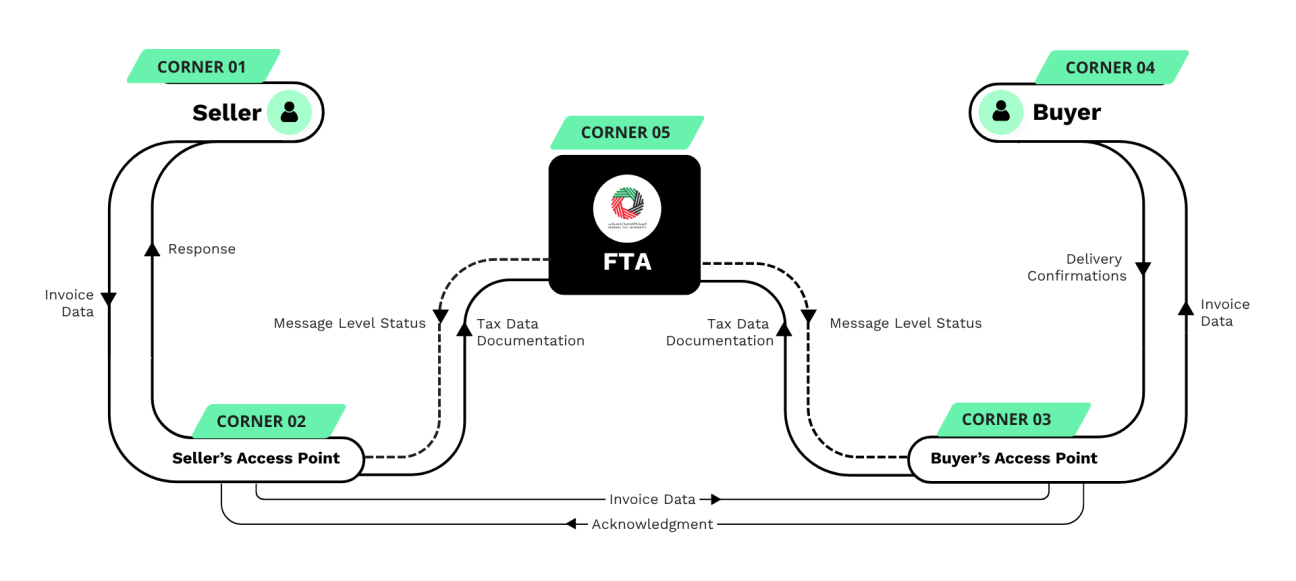
The UAE follows a decentralized exchange model, often referred to as the 5-corner (DCTCE) framework. While there is no direct submission by the business, compliance is built into how invoices move across the network. This makes system readiness and integration non-negotiable.
The seller generates the invoice within their system
The invoice is sent to an Access Service Provider (ASP)
It is validated and transmitted via a regulated network (such as Peppol)
The buyer receives the invoice through their own access point
Transaction data is shared with the tax authority
e-Invoicing Process
UAE E-Invoicing DCTCE Model
Components of e-Invoicing
What Makes Up a Compliant E-Invoicing Setup
To operate within this model, businesses need more than invoice generation capability. Each of these components must work together. Gaps in any one area can result in failed submissions, delays, or compliance risks. A compliant setup typically includes:


Structured invoice formats (XML/JSON aligned to PINT AE standards)
Accurate master and transactional data across systems
Validation logic aligned with tax and schema requirements
Integration with ASPs and exchange networks
Real-time reporting and status visibility
Audit-ready records and traceability
Need for e-Invoicing
Why This Shift Matters

Compliance happens before an invoice is accepted, not during audit
Errors are caught instantly, often resulting in rejections, not corrections
Invoice data must align across ERP, tax logic, and reporting structures
Manual workarounds no longer hold - systems are now part of compliance
e-Invoicing Lifecycle
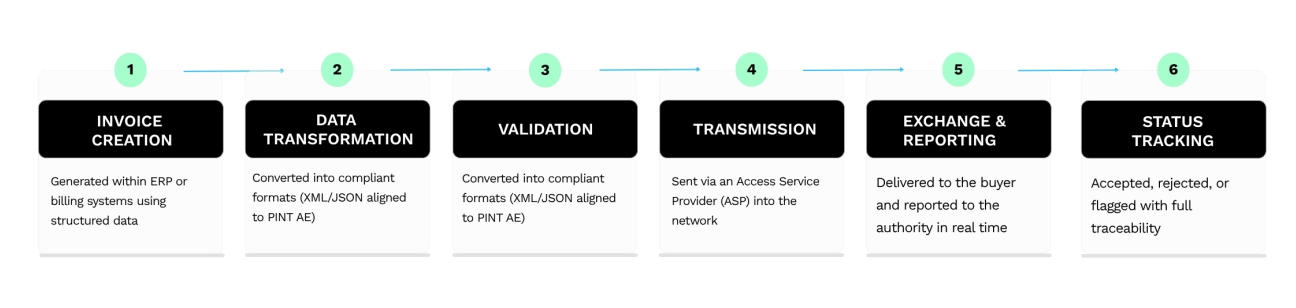
From Invoice Creation to Regulatory Acceptance, Handled as a Single Flow
In a regulated environment, an invoice is no longer “created and sent.” It moves through a defined lifecycle where each stage must pass validation before progressing. This is not a linear handoff between systems, but a controlled, interdependent process, where failure at any stage disrupts the entire flow.
Talk to us
How Vantheon Technologies Helps
System Alignment
Connect ERP, finance, and external platforms into a single, consistent invoicing flow
Data Readiness
Identify and fix gaps in master and transactional data before they result in rejections
Regulatory Interpretation
Translate UAE e-invoicing requirements into system-level logic and validations
ASP & Network Integration
Manage dependencies across Access Service Providers and exchange networks without fragmentation
Process Control & Ownership
Establish clear accountability across finance, tax, and IT functions
End-to-End Implementation
Deliver e-invoicing as a structured rollout, not a standalone tool deployment
SOLUTION CAPABILITIES
Core Capabilities of the Vantheon e-invoicing Solution


RESULTS & BENEFITS
Key Benefits

Reduced Compliance Risk
Built-in validation and regulatory workflows minimize errors and non-compliance.

Lower Operational Complexity
One centralized solution replaces fragmented local tools and manual processes.

Improved Finance Productivity
Automation reduces manual invoice handling, follow-ups, and reconciliations.

Scalable by Design
Supports growth across entities, transaction volumes, and regulatory changes without re-architecting systems.
Integrations
How It Fits Into Your Existing Systems
The solution is designed to work within your existing ecosystem, not replace it. Using APIs and secure connectors, Vantheon Technologies embeds compliance into your current workflows with minimal disruption.
ERP platforms such as Oracle NetSuite
Finance and billing systems
Access Service Providers (ASPs)
E-invoicing networks like Peppol
Regulatory Timeline
UAE E-Invoicing Rollout Timeline
The UAE e-invoicing mandate will be introduced in phases, based on business size and entity type. These deadlines define when organisations are required to be connected to the network and fully compliant. Understanding where your business falls is critical to planning your implementation timeline.
| Entity Category | ASP Appointment Deadline | E-Invoicing Mandatory Form |
|---|---|---|
| Companies with Revenue >= AED 50 million | 30 October 2026 | 1 January 2027 |
| Companies with Revenue < AED 50 million | 31 March 2027 | 1 July 2027 |
| UAE Government Entities | 31 March 2027 | 1 October 2027 |
BEST SUITED FOR
Who This Solution Is Built For
Quick Answers